Why are you running for City Council?
I’ve spent 20 years in the Army and currently serve on the Monroe County Board. I believe leadership is a mission of service. My son, Patrick, has done a great job representing District 6, and I want to pick up that mantle to ensure Tomah stays on a path of smart, fiscally responsible growth.
How does your military background help you in local government?
In the Army, I served as a Senior NCO in logistics. That means I was responsible for getting the right resources to the right people at the right time—without waste. In city government, logistics is everything. It’s about managing a budget under pressure and ensuring our infrastructure and services are mission-ready.
You have an MBA; how will that benefit the taxpayers of Tomah?
A Masters in Business Administration (MBA) provides more than just a credential; it provides a specific lens through which to view the city’s complex financial health. I don’t ‘rubber stamp’ proposals because I have the training to look past the surface of a budget and analyze the long-term ROI (Return on Investment) for every tax dollar spent. Currently, I am applying this ‘MBA Perspective’ to two major issues facing our district:
- Strategic Debt Management (TID 8): There is significant discussion regarding the city ‘forgiving’ nearly $1.9 million in sewer utility funds advanced to TID 8. From a business standpoint, I am analyzing the Opportunity Cost. While forgiving an advance sounds difficult, doing so may allow the city to close TID 8 by 2027—decades earlier than planned. This would stop tax dollars from being ‘trapped’ in a deficit district and allow them to flow back into our schools and general fund. However, my support is strictly conditional: I will only favor this if we can guarantee it won’t lead to an unfair utility rate spike for the families in District
- Proactive Asset Management ($8.2 Million Bonding): The city is possibly moving toward issuing $8.2 million in bonds for 2026 street and utility projects. In the military and in business, we know that ‘deferred maintenance’ is just another word for ‘expensive emergency.’ Fixing our water and sewer mains proactively today is a sound financial investment that prevents catastrophic—and much more expensive—failures tomorrow. My goal is to ensure these funds are treated as a mission-critical objective: executed with total transparency, zero waste, and strict oversight.
By bringing this level of professional financial scrutiny to the Council, I ensure that Tomah’s growth is smart, sustainable, and always prioritized for the taxpayer’s benefit.
How will you address the housing shortage in Tomah?
We need ‘Smart Growth.’ I support updating our zoning codes to allow for more diverse housing options—like starter homes and senior living—while ensuring we protect the quiet, residential character of neighborhoods like those here in District 6.
What is your plan for revitalizing the downtown area?
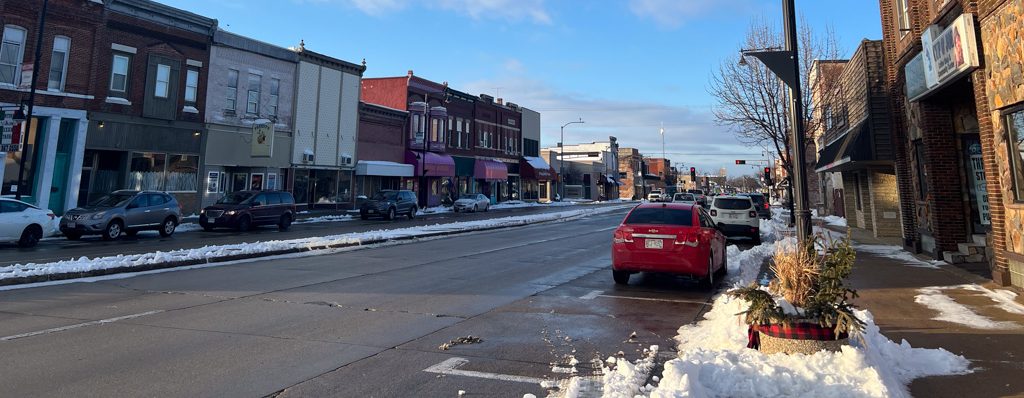
We need to make it easier for small businesses to set up shop. I advocate for cutting the ‘red tape’ in our permitting process and looking for ‘Tomah First’ incentives. We want a downtown that is a destination for families and a hub for local entrepreneurs.”
What is your position on the new Short-Term Rental (Airbnb) ordinance?
I believe in local accountability. A permit system ensures that rental properties are safe, inspected, and paying their fair share of room taxes. Most importantly, it gives the city the tools to protect neighbors from noise or parking issues. It’s about balance—supporting tourism while protecting our residents.
How will you work with the new City Administrator?
I speak the language of clear communication and mission execution. My role on the Council is to provide the ‘gut check’ and oversight for the citizens. I look forward to a collaborative, professional relationship where we focus on data-driven results for Tomah.
You’ve lived in Tomah for five years. Why should voters trust you?
I chose Tomah as my home, and I’ve spent those five years deeply involved in the community and serving three years on the Monroe County Board. My wife of 28 years and I have put down deep roots here. I’m not running for a title; I’m running because I’m invested in the future of the streets where we live.
What is your #1 priority if elected?
Fiscal transparency. I want every resident of District 6 to know exactly where their tax dollars are going and why. I promise to be a ‘listening ear’ for your concerns and a ‘steady hand’ when it comes to the city’s checkbook.
You already serve on the Monroe County Board. Will you keep both seats, and how does that benefit Tomah?
Yes, I intend to serve in both roles. Many successful leaders in Wisconsin do this because it creates a direct line of communication between the city and the county. When we discuss shared issues like Public Safety or Solid Waste, I won’t have to ‘wait for a report’—I’ll already be at the table. It ensures Tomah’s voice is heard at the county level and that our tax dollars aren’t being duplicated across two budgets.
You voted for “Public Use Days” at the county dump. Why does that matter for a City Council race?
It’s about Infrastructure and Efficiency. By opening up ‘Public Use Days,’ we kept our waste services local and affordable. If we had outsourced that, costs for every household in Tomah would have spiked. On the City Council, I’ll bring that same mindset: looking for local, common-sense solutions that keep our utility rates stable instead of sending our money—and our control—out of town.
What is your plan to support Tomah’s Police and Fire departments?
Public safety is the first priority of government. On the County Board, I worked to secure the tactical vehicles and equipment our Sheriff’s Department needed to stay safe. In the City, I’ll advocate for a Long-Term Equipment Replacement Plan. We shouldn’t be surprised by the cost of a new fire truck or squad car; we should be planning for it years in advance so we never have to choose between safety and a balanced budget.
How will you handle the tension between “Growth” and “Small-Town Feel”?
My wife of 28 years and I moved here because Tomah has a soul. You don’t get that in big cities. My ‘Tomah First’ approach means we only approve growth that adds value to our community. If a development increases traffic or noise without providing a clear benefit to our tax base or our quality of life, it’s a ‘no’ for me. We want growth that feels like a natural extension of our home, not a takeover.
What does “A Listening Ear” actually mean in practice for District 6?
It means I’m available. Whether it’s at one of the local establishments, a local trivia night, or just seeing me out in the yard, I want to hear your concerns before the Council meeting, not after the vote. I’ve found that the best ideas don’t come from a boardroom in Madison—they come from neighbors talking over a cup of coffee. I promise to be the representative who returns your calls and actually listens to your perspective.